Gel vs. Acrylic Halloween Nails: Which Is Better?
Compare design flexibility, dramatic length, application, maintenance, removal and safety so you can choose the nail system that fits your Halloween look.
Quick answer
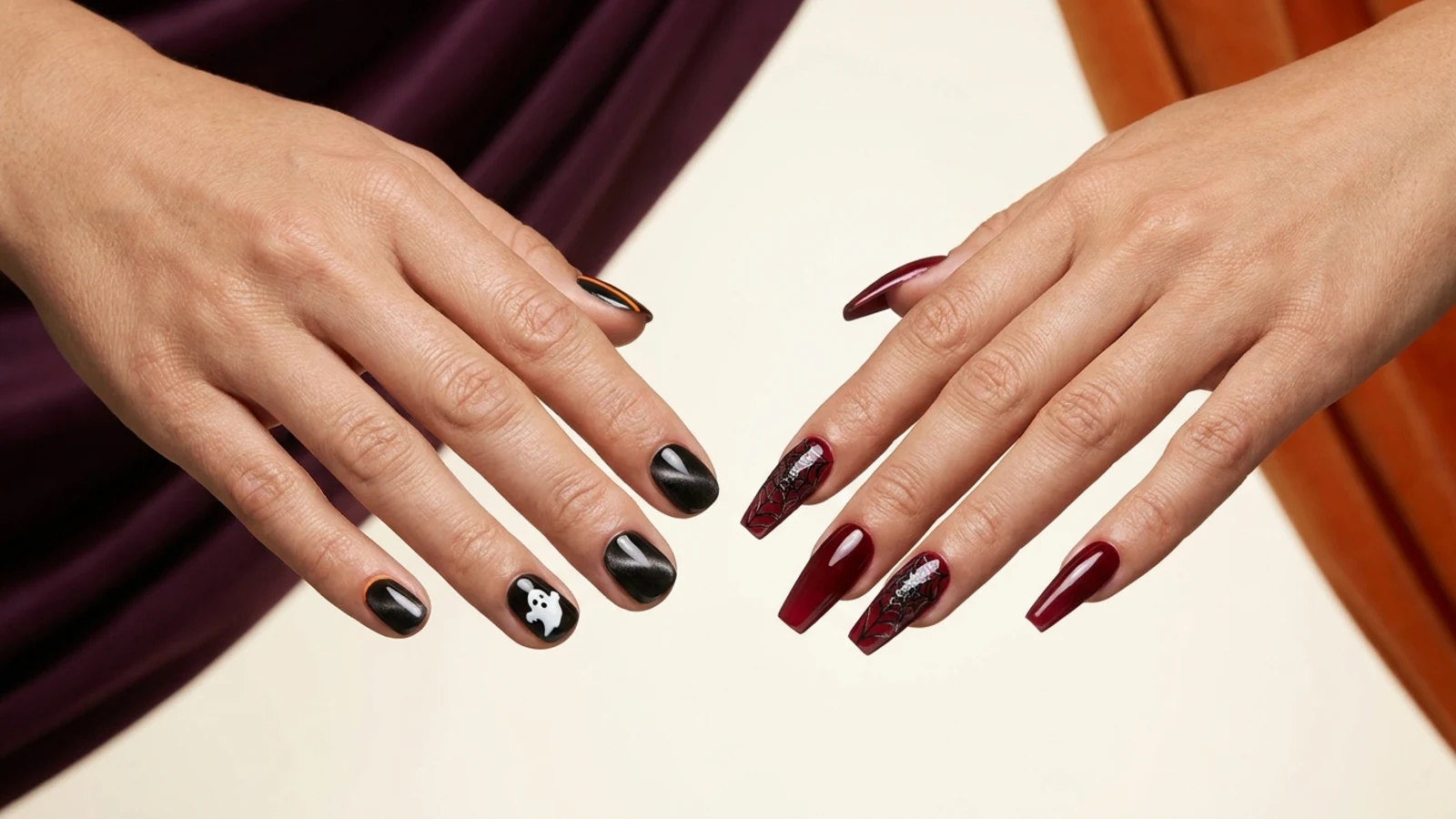
Choose gel for glossy color, flexible overlays, short-to-medium designs and a more natural feel. Choose acrylic when the look depends on long coffin or stiletto shapes, rigid structure or elaborate 3D art. Neither system is automatically damage-free; application, skin contact and removal matter.
Gel vs. acrylic Halloween nails at a glance
| Decision factor | Gel nails | Acrylic nails |
|---|---|---|
| Best Halloween use | Color, cat-eye, chrome, glow and detailed art | Long sculpted shapes and heavier 3D art |
| Feel | Generally thinner and more flexible | Generally firmer and more rigid |
| How it sets | Compatible curing lamp | Liquid-and-powder chemical reaction |
| Length | Natural nails to moderate extensions | Strong option for substantial sculpted length |
| DIY fit | Possible with training and a compatible system | Less forgiving; professional service is practical for dramatic sets |
| Main trade-off | Lamp exposure, acetone and uncured-product allergy risk | Filing, rigidity, odor/ventilation and fill maintenance |
What are gel Halloween nails?
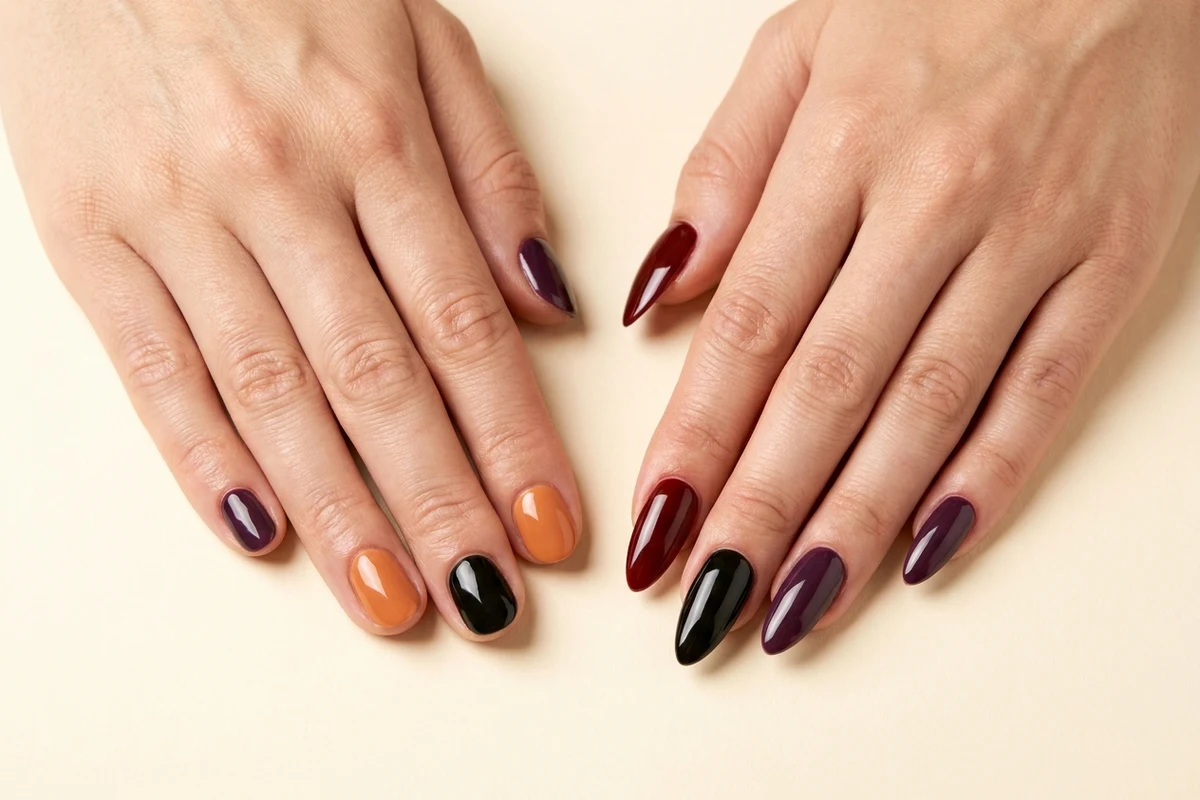
Gel can mean gel polish, soak-off builder gel, soft-gel tips or hard gel enhancements. This comparison focuses mainly on gel color or soak-off gel used for Halloween designs. Gel stays workable until cured under the compatible lamp, supporting layered color, fine-line art, chrome, cat-eye and glossy finishes.
What are acrylic Halloween nails?
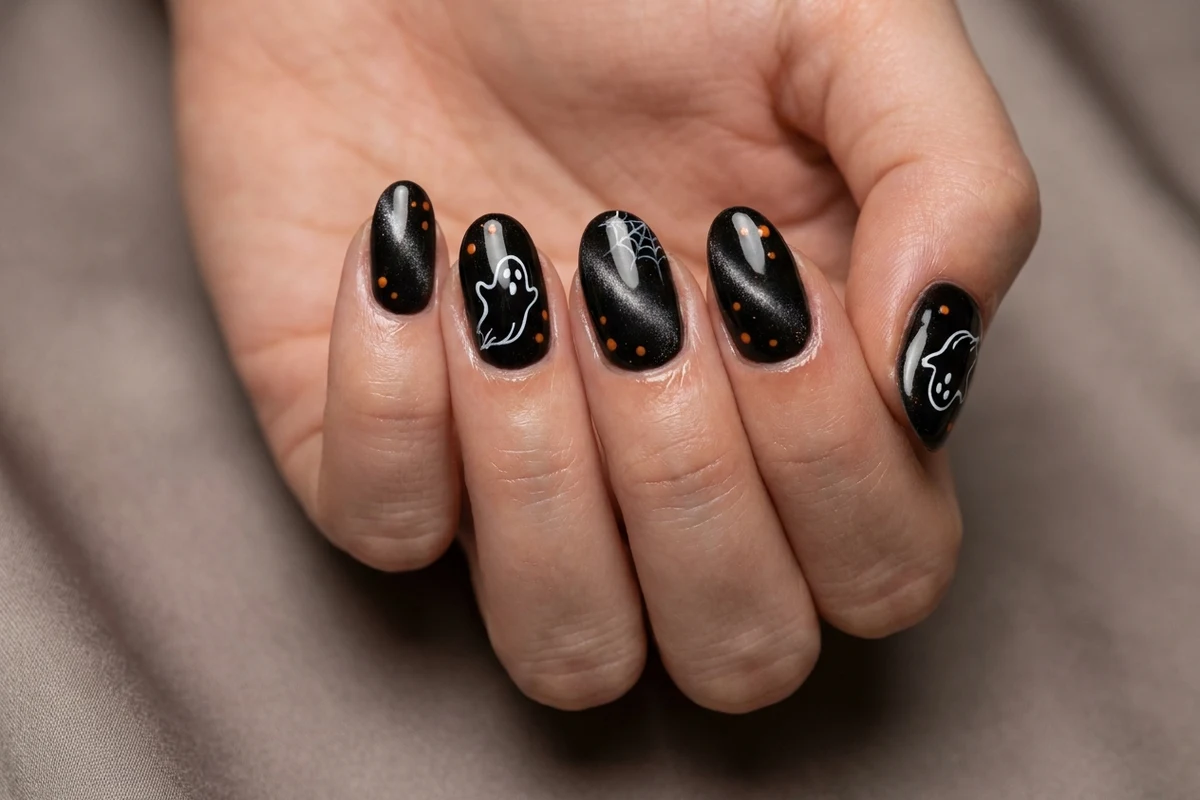
Traditional acrylic combines a liquid monomer with a powder polymer. The material starts hardening after mixing, then is shaped and filed. It is commonly chosen when the design depends on added length, a pronounced apex, sharp coffin or stiletto shapes, encapsulated elements or raised art.
AAD explains that preparation can involve roughening the natural nail and removal often requires acetone, filing or both.
Which looks better for Halloween designs?
Neither material wins on appearance alone. The design decides.
Gel usually fits
- Short ghosts, spiderwebs, pumpkins and blood-drip art
- Glossy black, deep red and orange manicures
- Cat-eye, chrome, glitter and glow finishes
- Natural-length nails and wearable fall transitions
Acrylic usually fits
- Extra-long coffin, almond or stiletto silhouettes
- Sculpted claws, fangs and exaggerated tips
- Encapsulated glitter, foil or decorations
- Raised 3D art and costume-led editorial sets
Strength, flexibility and breakage
AAD describes soak-off gel as more flexible than acrylic and says that flexibility may make a natural nail less likely to crack than with acrylic. That does not make gel unbreakable or risk-free. Long extensions of either type can lift or break, and rigid enhancements can place leverage on the natural nail if they catch.
For typing, childcare, cooking or travel, shorter length may matter more than the material.
Length and shape: the clearest dividing line
Choose gel when you want Halloween art without dramatically changing your natural nail shape. Choose acrylic when the silhouette is essential to the costume and substantial sculpted length is required.
Builder gels, hard gels and soft-gel tips are alternatives, but each has its own preparation, curing and removal requirements. Do not assume every gel service is soak-off.
Application and skill level
Gel depends on controlled layers, avoiding skin contact and using the lamp and curing schedule specified by the manufacturer. Acrylic requires controlling the liquid-to-powder ratio, building structure and filing the hardened enhancement. For beginners, acrylic is less forgiving; professional application is the more realistic choice for long sculpted sets.
Maintenance and removal
Do not peel, pry or force off either system. AAD advises against picking gel polish and recommends limiting acetone exposure to the fingertips. Its artificial-nail guidance notes that acrylic wear may involve touch-ups every two to three weeks as the natural nail grows.
Some gels soak off; others require filing. Acrylic may require acetone, filing or both. Follow the exact system instructions.
Cost and value
Prices vary by city, salon, length, art complexity and whether removal is included, so exact claims need local verification. Gel often offers better value for seasonal color or art on natural nails. Acrylic may justify the additional service and maintenance when dramatic structure is central to the costume.
Ask whether the quote includes extensions, complex art, charms, removal and future fills.
Safety, allergies and nail health
Neither system should be treated as harmless. The FDA explains that residual methacrylate monomers in artificial nails can cause redness, swelling or nail-bed pain in sensitized people and advises avoiding skin contact. AAD notes that gel manicures can contribute to brittleness, peeling and cracking and recommends UV protection, avoiding cuticle cutting and taking breaks.
Stop if you develop persistent itching, swelling, blistering, pain or nail changes and seek qualified medical advice. If nails are already brittle, soft, damaged or inflamed, ordinary polish or press-ons may be a lower-commitment option.
AAD gel guidance · AAD artificial-nail guidance · FDA nail-product guidance
Which should you choose?
Choose gel if you
- Want art and seasonal color on natural nails
- Prefer a thinner, more flexible feel
- Plan short-to-medium length
- Want cat-eye, chrome, glow or glossy effects
Choose acrylic if you
- Need dramatic length or sculpted shape
- Want coffin, stiletto or claw-like tips
- Plan heavier 3D details
- Can commit to professional maintenance and removal
Consider another option if you
- Need a one-night look
- Have damaged nails or previous reactions
- Cannot safely maintain long extensions
- Do not know the required system or removal method
Halloween scenario guide
| Your plan | Better starting point | Why |
|---|---|---|
| Cute ghosts on short nails | Gel or ordinary polish | The art matters more than structure |
| Long vampire stilettos | Acrylic or professional extension | Length and shape are central |
| Black cat-eye manicure | Gel | Magnetic gel effects use controlled curing |
| One-night costume | Press-ons or ordinary polish | Lower commitment |
| Heavy 3D haunted set | Professional acrylic | Rigid structure supports elaborate decoration |
| Damaged or inflamed nails | Pause and seek advice | Covering damage can worsen a problem |
Frequently asked questions
Is gel better than acrylic for Halloween nails?
Gel is usually better for short-to-medium art and special finishes. Acrylic is better when dramatic length, rigid structure or sculpted art is the main goal.
Which lasts longer?
There is no responsible universal winner without defining the system, length, application quality and daily wear. Both require correct preparation and removal.
Is gel safer than acrylic?
Not automatically. Gel is more flexible, but it still involves curing exposure and can contribute to brittleness, peeling and cracking. Both systems can cause problems through skin contact, sensitization or improper removal.
Can beginners do acrylic at home?
Acrylic is less forgiving because bead control, structure, shaping, filing and ventilation matter. Beginners seeking long sculpted nails should consider a trained professional.
What is best for one Halloween party?
Press-ons, stickers or ordinary polish may be more practical because they require less maintenance.
Plan the rest of your Halloween manicure
Choose the design first, learn the application steps, then compare products only if gel is the right system for you.
Final verdict
For most Halloween art on natural nails, gel is the more versatile starting point. Acrylic earns its place when the shape itself is part of the costume—long stiletto, coffin, claw or sculpted 3D nails.
The better choice is the system that delivers the design with the least unnecessary length, maintenance and removal risk for your routine. Confirm the exact product, application method, removal method and current price before committing.